

Lifelong Learning
As the new school year is about to begin, tonight we looked at the subject of lifelong learning from the book of Proverbs. Learning doesn’t just happen in school – babies and toddlers are learning so many things every day and we can all learn new things throughout life. The book of Proverbs is full of wise sayings, ‘written down so we’ll know how to live well and right, to understand what life means and where it’s going; a manual for living, for learning what’s right and just and fair.’ (Prov 1:2-3, The Message)
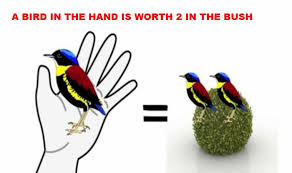
We looked at lots of ordinary proverbs (‘a bird in the hand is worth two in the bush’ and ‘an apple a day keeps the doctor away’, for example).

We also looked at 5 proverbs in the Bible:
-
The fear of the Lord is the beginning of wisdom. (Prov 1:7) – teaching us that we need to put God first and learn to respect Him and honour Him if we want to be wise
-
The fear of human opinion disables – trusting in God protects you from that. (Prov 29:25) It’s easy to let other people influence us (this is often known as ‘peer pressure’), but if we trust in God we won’t be so bothered by what other people say or think because we’ll be more concerned in doing what He wants.
-
To learn, you must want to be taught. To refuse reproof is stupid. (Proverbs 12:1) We all need to be willing to learn and to accept that we don’t know everything. This also means we will need to be corrected at times and we will accept this in order to learn.
-
Pride goes before destruction and haughtiness before a fall. (Proverbs 16:18) Pride and haughtiness relate to a high position, and we all know that if we climb too high and without precautions, we risk falling! God wants us to be humble and to accept that we don’t know everything.

-
Trust God from the bottom of your heart; don’t try to figure out everything on your own. Listen for God’s voice in everything you do, everywhere you go; he’s the one who will keep you on track. (Proverbs 3:5-6) One version of the Bible says of this verse, ‘don’t lean on your own understanding.’ When you lean on something, you hope it’s going to be strong and steady, otherwise you’ll topple over. If we are leaning on what we know and understand or on what other people know and understand, eventually we’ll topple over and fall. But if we lean on God, we won’t go wrong, because He’s strong and can’t be moved!
Doing The Impossible (2)
Paul’s command to bless our enemy (Rom 12:14) is not something we can do in our own strength; to love those who hate us, persecute us and oppose us requires a completely new way of feeling and thinking. God has promised to give us a new heart of flesh (Ezek 11:19) and urges us to be made new in the attitudes of our mind. (Eph 4:22) It’s only when we are living in this newness of life offered to us by God that we receive the power to do this impossible task of loving as God loves.
Loving our enemy is not natural or instinctive, but God wants us not to be overcome by evil but to overcome evil with good. (Rom 12:21) We need to do the right thing, however difficult it is. This means training ourselves to do what is right and choosing to do what is right. Tommy Emmanuel, the guitarist, speaks of how he has trained his thumb to stay in positions it does not naturally wish to go to, speaking of the conversation between his thumb (‘I don’t want to do that’) and his will (‘yes, you will do it.’) We too have to put to death our sinful nature (which can come up with all sorts of reasons why obeying God is foolish) and obey, whether we feel like it or not. It’s only in surrender and obedience that we find the freedom that God promises to His children.

Love and Snow
Doing the Impossible
Some people seem to be able to do things which to the majority of people are quite impossible. Contortionist Aleksei Goloborodko, for example, member of the Cirque du Soleil, can get his body into positions which most of us would simply be unable to do, as this video demonstrates. His flexibility and ability to move his body in ways ordinary people can’t are the result of many years of hard work (he started at the age of four) and many hours of practice per day. For him, this kind of activity is ‘normal’, but for most of us it would be impossible.
In Rom 12:14 we see a verse which commands us to do the impossible: ‘Bless those who persecute you; bless and do not curse.‘ It’s such a revolutionary, counter-intuitive way of living that Paul goes on to expand on this idea in Rom 12:17-21, but this is not just Paul’s idea. Peter tells us ‘Do not repay evil with evil or insult with insult. On the contrary, repay evil with blessing, because to this you were called so that you may inherit a blessing’ (1 Pet 3:9) and both apostles were simply echoing the words of Jesus in Matt 5:44-45. To do these things is not normal; it goes agains all we are taught throughout life and all received wisdom, but this is how God wants His people to be.
Many of God’s commands to us seem to make sense (e.g. the commands to not steal, lie or get drunk – see Eph 4:28, Eph 4:24, Eph 5:18) and many of us have little difficulty in obeying these commands. But the command to love and bless our enemies goes beyond the natural and the normal. It requires us to live in a miraculous realm, where dependence on God is the only way we can fulfil His will.
Many of us struggle even to bless those we love, as the New Testament makes plain. Paul reminds us that we are called to put others before ourselves (Phil 2:3), which may well mean being trampled on or cheated (see 1 Cor 6:7). If we are to fully obey God in blessing our enemies, however, we need to surrender to God’s word and, when forced to choose between our feelings and desires and obedience, choose to obey. Jesus is our example of living out this ‘new normal’ (see 1 Pet 2:20-23) and if we want to do impossible things, it will mean going back to the start and practising daily living out God’s commandments in His strength and not in our own.

Staying On Course
“After John was put in prison, Jesus went into Galilee, proclaiming the good news of God.” (Mark 1:14)
If my relative had been imprisoned, I don’t think I would have been very happy about it and it’s likely I would have found it difficult to focus on things. Yet in this verse we are told that Jesus went into Galilee and began to proclaim the good news of God after John was put in prison. I don’t think Jesus was heartless or disregarding of John. We know from other places in Scripture that he had a high regard for him. Yet He was not deflected or distracted by this apparent setback. He was not daunted by bad news in the way that we so often are.
Rend Collective’s song ‘True North’ says, ‘I will not let the darkness steal the joy within my soul; I will not let my circumstance become my compass, no.’ We so easily let darkness steal our joy; we so easily let circumstances dictate our actions and paths. But Jesus did not do that. Instead, He went into Galilee and proclaimed the good news of God. He followed His calling, not HIs feelings. He didn’t allow the ‘bad news’ of John’s imprisonmnet to overshadow the good news of the kingdom of God.

‘True North’ goes on to say, ‘I will not let the fears of life and sorrows of this world dictate to me how I should feel, for You are my true north.‘ God is the anchor of our life. He provides the stability and direction we need and therefore circumstances, fears, sorrows and failures do not have to define us. God is our identity.
Later, when Jesus heard of John’s execution, we see Him withdrawing privately to a solitary place. (Matt 14:13) I imagine He wanted to be alone in His grief. Yet when He landed on the other shore and saw the crowd waiting for Him, He had compassion on them and healed their sick (Matt 14:14), going on to feed them (Matt 14:15-21). Once again, He kept the bigger picture in view and did not allow Himself to be deflected from serving God.
To serve God in this single-minded fashion requires devotion and an ongoing practice of establishing spiritual priorities. It’s much easier to panic, sulk, doubt or retreat when life does not turn out the way we expected it to. If God is our ‘true north’, however, then we can stay on course, even if life appears to be throwing us off course!
Picnic In The Park
Despite the rain which came at 1 p.m., the ‘Picnic In The Park’ event was great fun. Organised by the Dearne Area Team and supported by Big Local Thurnscoe, Berneslai Homes, Barnsley Community Champions and many other local organisations, the event was held in Hanover Street Park and was attended by almost 100 people.
Setting up for the event


Not only did the children have the opportunity to play in the newly refurbished park, there were games and other activities and a climbing wall to explore!


The picnic provided by Millie’s Cafe was enjoyed by all:


Our thanks to all involved in the event and to all who came.
Friendship With God (2)
The Bible has many examples of ordinary people who became friends with God:
-
Abraham (James tells us ‘Abraham believed God, and it was credited to him as righteousness, and he was called God’s friend.’ James 2:23, with other references being in 2 Chron 20:7 and Is 41:8)
-
Enoch (who walked with God, implying a close friendship)
-
David (a man after God’s heart whose psalms indicate a close friendship and intimacy with God.)
Jesus offered us all the opportunity to be His friends, telling HIs disciples ‘you are my friends if you do what I command.’ (John 15:4) So often, we can feel excluded from some friendship groups and that is extremely painful, but the only condition for friendship with God is obedience. We don’t have to earn God’s love (see Deut 7:6-8); Jesus died for us because of that great love. He cares for us so much, and loves us to such an extent that He died for you and me. Jesus gave His life so that we might have life, now and forever.
Though other friends may wound us, hurt us, reject us and leave us feeling forsaken, Jesus will never leave us or treat us in that way. We are all welcome – He died for each one of us. He waits to welcome us with open arms and those arms are there to carry us and support us throughout every stage of our lives. He offers us His friendship – are we willing to accept that offer and walk with Him too?
