Embrace Wisdom
The book of Proverbs has much to say about wisdom (and its opposite, folly). It tells us to ‘get wisdom, get understanding’ (Prov 4:5) and adds, ‘do not forsake wisdom, and she will protect you; love her, and she will watch over you.’ (Prov 4:6) Wisdom is personified as being more profitable than silver, yielding better returns than gold and more precious than rubies (Prov 3:14-15) and most of us would acknowledge that wisdom (the ability to live well, not just to know things) is preferable to the alternatives!
The Bible tells us that the fear of the Lord is the beginning of wisdom and that we are not to be wise in our own eyes (see Prov 9:10 , Prov 3:7). James continues this theme by comparing and contrasting earthly wisdom and heavenly wisdom (James 3:13-18). We need God’s wisdom in so many situations (maybe more so than ever in these very strange times) and can only embrace this as we embrace the source of all wisdom. The more we nurture our relationship with God and learn to do as He says, the wiser we will become.

A Mother and Her Son
Dave’s sermon, delivered by Julie in this strange online world we are currently calling ‘church services’, was entitled ‘A Mother and Her Son’, and reflected the fact that today is Mothering Sunday in the UK. We looked at Mary, the mother of Jesus, and saw something of the difficulties of being a mother. Mary’s life was turned upside down by the angel’s announcement to her as a young teenager, but she was willing to do as God said. (Luke 1:38) It’s likely that she was widowed when Jesus was still quite young, and being a widow with other sons and daughters must have been a daunting task. Mary displayed both courage and bravery throughout her life – characteristics all mothers need.

Children can baffle us at times. Mary was probably baffled by much of Jesus’s teaching, especially that which seemed to repudiate His close family ties (Matt 12:49-50). We too can be baffled by our children, even as they grow up. Children can also cause us much heartache: Mary must have been devastated to see her son hanging on the cross like a common criminal. But ultimately we believe that children make life worthwhile. The £160,140 it has been estimated as the cost of bringing up a child is well worth it as we learn to see life through the eyes of a child and feel the love and security of a relationship like no other.
Children can baffle us and break our hearts, but they bring us untold joy. We, as God’s children, may baffle and break His heart too, but He loves us so much that He sent His Son to save us. Jesus, even on the cross, thought of His mother’s love, care, affection, sacrifices, hurts and needs and entrusted her to the care of John, His disciple (John 19:26-27). As we celebrate Mothering Sunday – often being apart from our mothers because of the current situation, unable to show the love and attention we would normally give – we celebrate not only a mother’s love, but the love of God for each one of us which means we are part of His family forever more.

Finding Peace
22nd March 2020 was a first for us as a church: the first time we could not gather together in person (because of the situation with Covid-19), so the first time we gathered online, using Facebook live. Many churches have livestreamed services for years, thus helping those who are disabled and unable to get to the church building, but this was the first time that the majority of churches throughout the UK used livestreaming as the way to keep people connected who could not be physically present.
Garry and I therefore sat in the church building and talked to people via Messenger as we prayed and read God’s word together. It felt decidedly odd to be doing church that way, but we are grateful for the technology available and for the people who chose to connect with us this morning.
Garry spoke about finding peace, even in troubled times. People are bewildered at the moment; we’ve never lived through anything like this global pandemic before. Some people are defiant and some are angry, but perhaps the predominant emotions are fear, uncertainty and doubt. Not only are people concerned about their health and the health of their loved ones, they are also concerned about the economic effect on our country and on individuals who are no longer certain they have a job.
Heb 12:26-28 talks about things being shaken, and that really summarises how we feel right now. When we talk about earthquakes (such as the one which hit Zagreb today), we use the term ‘seismic activity’, and that reminds us that what seems so solid to us can totter and fall. God shakes us not to mess things up, however, but to wake us to reality, to show us when our confidence is in wrong things. People are fearful right now (see Luke 21:26); in the Message version, it talks about things being ‘in uproar… in a panic, the wind knocked out of them by the threat of doom, the powers-that-be quaking.’ Yet even now, God speaks into our fear, desperation and anxiety; He speaks His reliable, sustaining, creative word.
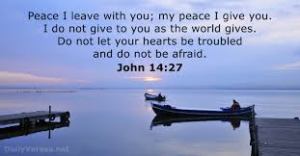
The word Jesus predominantly speaks to us is a word of peace (see John 14:1-4, John 14:27). He promises His peace to us: Shalom, a word meaning peace, harmony, wholeness, completeness, prosperity, welfare and tranquillity. Even in times of difficulties, hardship and suffering, He offers us peace. As we focus on our Saviour and trust in Him, we can have peace. Our part is to refuse to let our hearts be troubled because we are relying on the Prince of Peace to supply us with all we need.
Online services
Today we’ll be trying something many churches have been doing regularly for some time… but for us, it’s a first. As with all firsts, there’s a sense of the unknown, but we hope we can maintain some semblance of normality even in our ‘try-something-different’ approach.

We appreciate not everyone has Internet access and we’ll be doing our best to stay in touch with people through telephone conversations and texting as well, but since the vast majority can access the Internet, we’ll also be putting up services online on Sundays and on Thursdays when we would normally have meetings (and maybe some other times as well… we’re investigating options!)
This morning at 11 a.m., Garry and I will be in the church building doing a service that can be accessed by Facebook livestreaming. If you go to the church Facebook page (type in GPCC or the full church name to find it – https://www.facebook.com/GoldthorpePentecostalCommunityChurch/), at 11 a.m. we will hold a live service. You should be able to see us and hear us and we’ll be praying and Garry will be giving a short message.
Tonight at 6 p.m. we’ll be trying a service using a different technology (Zoom), just to see how things go and what people find easiest. I’ll be posting a link to that later today; to access the service, you will need to access the link on a tablet or laptop or computer. If you are using a mobile phone, please download the free app Zoom so you can watch it. That should be relatively easy to do, I’m told!
Please bear with us, as this is all very new to us, but we really do want to give people the opportunity to see each other, listen to God’s word and to pray. We’re working on songs etc., having just purchased a livestreaming licence which should allow us to sing our usual songs without infringing copyright laws. So we are doing our best to provide services to you all and hope you will take the time out of your schedules to pause and join with us, even though it may feel odd worshipping God in this way at first.
If you can, please let us know you’re watching (usually available through ‘comments’ and ‘chat’ facilities on these options) and let us have feedback so that we know you’re there! It’s going to feel very strange talking to a camera rather than to a live audience, but hey… maybe we can reach even more people this way!

Embrace Stillness
Today is Mothers’ Day in the UK, a day when mothers are supposed to be shown additional love and respect from their families. One of the ways many families choose to do this is to give Mum a break from her usual chores, especially cooking, so many Mums will today have breakfast in bed. The usual treat of a Sunday lunch out is not possible in the current climate, but many families will still try to make the day as special as possible for Mums.

The life of a mother is usually an endless round of busyness, especially when children are very young and dependent. A mother will typically have to bath and dress children, sort out food and shopping and cooking, play with children, keep the house clean and often juggle work and other family commitments at the same time. There is very little time to sit down and relax; one of my favourite children’s books (‘Five Minutes’ Peace’ ) captures this sense of chaotic busyness when Mrs Large finally manages to grab three minutes and forty-five seconds of peace after being disturbed by her children everywhere, even in the bath. In our current situation, Mums will have even more to do now schools have closed and there is a sense of ‘how am I going to cope with all this?’ in many homes at this time.

Jesus urged us to come to Him when we are weary and burdened (‘burned out’, as the Message version puts it) and promised that He will give us rest. (Matt 11:28-30) One of the things we all need to do is to embrace stillness, to ‘be still and know’ that God is God. (Ps 46:10) We may feel stillness is as elusive as Mrs Large’s five minutes’ peace, but if we can be like Mrs Wesley who would pull her apron above her head in the kitchen as a sign to her large family that she needed a few minutes’ prayer with her God, we will find strength to go on, no matter what.

In The Hands Of The Potter
It’s been a very surreal week for all of us, but in the midst of it, it was my birthday. Most of my birthday plans had to go out of the window, but one thing that didn’t change was the gift of a new CD, Casting Crowns’ ‘Only Jesus.’ As I’ve been listening to this, I’m struck by how the lyrics of many of these songs are so applicable to us all in this current chaotic situation where ‘my life seems so out of control’. (‘In The Hands Of The Potter’) Many of us feel that the world is spinning and that life is breaking us, but actually, this is yet another opportunity for God to shape us and mould us. He is the Potter; we are the clay. (Jer 18).
It’s hugely important in our ‘social distancing’ that we don’t distance ourselves from God. We need to pray, sing and read His word on a daily basis – something we should be doing every single day, whether we have the opportunity to meet with other Christians or not. In essence, the current situation doesn’t have the power to hinder our walk with God – unless we let it. We live in an age where communication is easier than ever for most of us: we can stay in touch with people through telephone, social media, the Internet and video calls. We can also stay in touch with God through prayer, worship and His word, no matter what.
Many of us may find the singing part hard without other people around us. But there are so many opportunities to find Christian songs online and we can sing along to these! Christian radio (UCB or Premier Praise) can be accessed by many of us, plus You Tube has a whole host of songs for us to listen to, not to mention the live streaming that many Christian artists are offering on Facebook right now. This is one of the songs from the new CD I have; you can listen to it by clicking on the link in the title at the end of the lyrics. Let God’s love shape you and make you into the image of His Son!
‘I still remember when I heard You call me by name
I’d follow You anywhere, knew I could trust You in anything
But now sorrow beats down on me, waiting for You to come through.
I’m all alone with my questions, I’m dry and cracked open
And I thirst for You.
And as I fall apart,
Come flood this desert heart.
Fall like the rain, Living Water,
And I know Your way is best
Lord, help me find my rest
And I’ll be the clay
In the Hands of the Potter.
My world is spinning, my life seems so out of control;
Nailed, scarred hands tell the story of love that will never let go of me.
Through the sunshine or rain, I know where my hope is found
What You started in me, I know You will complete from the inside out..
My world is breaking me, Your love is shaping me
And now the enemy is afraid of what You’re making me
When my world is breaking me, Your love is shaping me
And now the enemy is afraid of what You’re making me
My world is breaking me, Your love is shaping me
And now the enemy is afraid of what You’re making me
And as I fall apart
Come flood this desert heart
Fall like the rain, Living Water
And I know Your way is best
Lord, help me find my rest
And I’ll be the clay
In the Hands of the Potter.’ (‘In the Hands of the Potter’, Casting Crowns)