Seasons of the Soul (2)
Michael & Stormie Omartian’s song ‘Seasons of the Soul’ has much spiritual wisdom in it. It’s unusual for a modern song in lasting almost seven minutes, with an instrumental introduction lasting 2 minutes 10 seconds.Maybe even the format of the song teaches us the need for patience! Its truths, however, remind us that ‘it’s not forever, just a season of the soul.’
“Whenever Summer dreams start to fade and lose their light,
And when the Spring in your heart seems so cold, it can’t be right,
And you feel like you’ve lost control,
And the valleys seem so low,
Well, it’s not forever, just a season of the soul.
If you could step away just to see how far you’ve gone,
If you would take the time just to be what you’ve become,
You could have the time to grow,
There would be a chance to know,
That it’s not forever, just a season of the soul.
Oh, it’s the season of the soul
It’s the season of the soul,
It’s the season of the soul,
It’s the season.
Walking alone in the desert at night, searching for the rain,
How can this happen to me? It’s not right, when Jesus is my friend.
Everything was going fine,
I was standing on the line,
Where did I go wrong?
Suddenly the sky was grey,
Looking like it was gonna stay,
Far too long.
Up on a mountain I heard His sigh, like an angel’s call,
If you don’t rest when the Winter is here, what will you bear in the Fall?
A time to cry, a time to sing,
There’s a time for everything,
Nothing lasts that long.
Don’t look at what you see,
And just keep your eyes on Me,
I won’t let you go wrong.
So when you look for the voice that you’ve known, and no one’s there,
And when it seems the caretaker’s heart just doesn’t care,
It’s the seasons of the soul,
It’s the seasons of the soul,
Well, it’s not forever – It’s the seasons of the soul.” (‘Seasons Of The Soul’, Michael & Stormie Omartian)

Seasons Of The Soul
This morning, in our series ‘The Miraculous & The Mundane’, we looked at the topic of ‘Seasons of the Soul.’ In nature, we have in our country four distinct seasons (spring, summer, autumn and winter), and each season brings with it different weather and different advantages and disadvantages. There is change in each season we cannot control, but there is also consistency, regularity and purpose in the seasons. After the flood, God promised, “As long as the earth endures, seedtime and harvest, cold and heat, summer and winter, day and night will never cease.” (Gen 8:22) We see that ‘there is a time for everything, and a season for every activity under the heavens’ (Eccl 3:1), and just as there are specific times for things to happen in nature, so our spiritual lives can seem to go through different seasons!
Most of us prefer spring and summer, when new life is happening, flowers blossom and we enjoy warmer weather. Autumn is a time of riotous colours and harvesting. Few of us like the barrenness and cold of winter. Similarly, in our lives, we want to feel the presence of God close to us and enjoy fruitfulness all the time, but we must also learn to navigate those more difficult spiritual seasons when perhaps God feels distant and we do not see what He is doing.
Navigating the seasons of the soul requires perspective, patience and perseverance. Without these three Ps, our lives will be at the whim of our feelings, and we will be tossed about (see Eph 4:14). Having perspective means seeing things from God’s point of view and understanding that the difficult seasons don’t last forever. As Paul puts it, ‘our light and momentary troubles are achieving for us an eternal glory that far outweighs them all. So we fix our eyes not on what is seen, but on what is unseen, since what is seen is temporary, but what is unseen is eternal.’ (2 Cor 4:17-18)

Patience means learning to wait for God (see Ps 27:14, Ps 33:20, Ps 37:7). There are lessons for us to learn from the Biblical principles of crop rotation and leaving land fallow (see Lev 25:1-7). It is counter-intuitive to us to leave land fallow, but this helps the soil to be refreshed and ultimately to be more fruitful. Similarly, those periods in our lives when nothing seems to be happening and God does not seem to be answering our prayers are times when we learn to lean more on Him and to grow in trust.

Perseverance is ‘patience plus’! Perseverance means we do what is right despite difficulty or delay in achieving success. If we persevere, James says, we may ‘be mature and complete, not lacking anything.’ (James 1:4) Moses persevered because he saw ‘him who is invisible.’ (Heb 11:27) Our perspective fuels our perseverance; we have to keep on doing what is right, no matter how we feel.

Whatever season of the soul we are currently facing, God is still with us. Paul reminds the Philippians that he is confident ‘that he who began a good work in you will carry it on to completion until the day of Christ Jesus.’ (Phil 1:6) With perspective, patience and perseverance, we can live through every season of the soul and know the joy of meeting the Lord face to face one day and being welcomed into His presence. Don’t give up.
A Busy Saturday
We had a busy Saturday yesterday as we held our monthly coffee morning in aid of the Macmillan charity. We raised £142.37 on the day and £25.55 from our Parent & Toddler group on Friday, giving us a total of £167.92 to pass on to the charity.
Our thanks to all who baked and to those who served and tidied away – and of course to all who attended and gave so generously.


After the coffee morning, Roger and Garry continued to work,building an IKEA storage unit for the Parent & Toddler group, thanks to a grant from Coalfields Regeneration Trust.


Dearne Community Arts’ Festival (3)
The festival also saw 6 groups performing on stage, inclluding Matthew Tiffany (Greentop Circus), Angel Voices Performing Academy, Barnsley Youth Choir East Children’s Choir, the Snap Tin Strummers, Clayton School of Dance and the Elks (a singing group from Y8 at Astrea Academy Dearne).
There’s such a range of talent in our young people and in the area generally. Well done to all!


Dearne Community Arts’ Festival (2)
There were 19 exhibitors at this year’s Dearne Community Arts’ Festival, with a wide range of creativity on show from art to photography, knitted items to wax melts, creative writing to items for the home and much more. We are grateful to all these local residents whose talent is simply amazing.


Dearne Community Arts’ Festival 2022
As always, the Dearne Community Arts’ Festival, an annual event championing creativity and celebrating community, was a fantastic family day out on Saturday 24 September. Since its inception in 2017, the festival has gone from strength to strength, wtih exhibitions, workshops, demonstrations and performances on stage providing a place for local residents to showcase their creative talents and for people of all ages to come together and have a go at different art forms.
Vincent the Sun Bear (the mascot for the festival) and a balloon arch were the first signs of creativity at the festival;


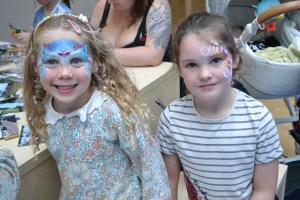
Inside on the High Street, there were lots of different activities to watch or have a go at, including 3D printing, glass painting, face painting, mosaic postcards, paper engineering and hot wax painting. It’s great to be able to try something new and be creative.